
Table of Contents
Understanding Vision in Meditation
The image of someone meditating often includes closed eyes, evoking an air of serenity and inner focus. However, the practice of meditation is versatile, and having your eyes open can be equally beneficial. This might feel surprising at first, like discovering a hidden path in a well-known forest. Open-eye meditation isn’t about missing out on the profound internal journey; it’s about enhancing your awareness of the present moment. This method can be especially liberating for those who find closing their eyes too restrictive or who prefer a connection to their immediate environment.
For individuals with hearing loss, maintaining open eyes during meditation might even become essential when reading captions in guided sessions. The key is to let your awareness be both inward and outward. Like a lighthouse casting its beam across the waters, your focus can rest on your breath, grounding you amidst the visual stimuli. This practice also prevents unintended dozing off, a common hiccup when eyes are closed. Whether you’re soaking in the environment’s details or letting your gaze soften on a single point, open-eye meditation can open doors to mindfulness, helping you become more grounded and present—no matter what’s happening around you.
Benefits of Open-Eye Meditation
Open-eye meditation offers a refreshing twist on traditional practices, presenting unique advantages that can enhance your mindfulness journey. Think of it like switching from a black-and-white movie to a vibrant color film—suddenly, there’s a new dimension of detail and richness. One clear benefit is the ability to stay more grounded and alert, which can be particularly useful if you find yourself getting sleepy during meditation. With your eyes softly open, you’re encouraged to inhabit the present moment fully, extending an invitation to incorporate more of the surrounding world into your practice.
This method also enhances your focus on visual stimuli, turning everyday sights into part of your meditative experience. It’s a subtle dance between observation and introspection, where your gaze becomes an anchor rather than a distraction. This approach can be especially beneficial in brightened environments or when you’re seeking to connect more deeply with your surroundings without diminishing your inner focus.
Furthermore, open-eye meditation can enrich your mindfulness practice by teaching you to cultivate a state of awareness no matter where you are. By integrating the external with the internal, you may find your path to personal tranquility and mental clarity broadened, helping you to navigate the balance between inner calm and outer distractions with grace.
How to Meditate with Eyes Open
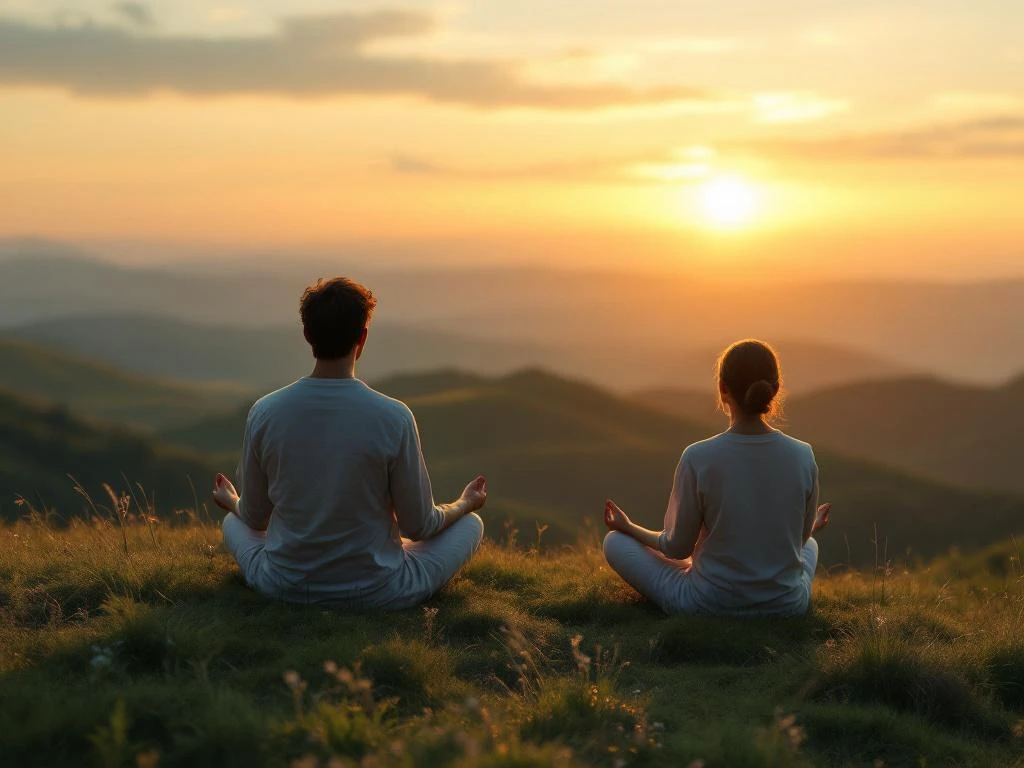
Meditating with your eyes open starts with letting go of the expectation to do it “right”—and that’s liberating! Start by finding a comfortable position, whether you’re sitting on a cushion or chair, with your spine straight and shoulders relaxed. Choose a spot in your environment to softly focus your gaze—a specific point directly in front of you or an element of the scenery around you can work well. Imagine you’re glancing at the horizon, not as a distant goal but as a steady presence that keeps you anchored.
Turn your focus inward by anchoring your awareness on your breath. Feel the gentle rise and fall as you inhale and exhale, allowing your breath to be a steady rhythm that centers you. If distractions arise—perhaps your mind wanders off or you’re tempted by something you see—acknowledge them with kindness. Then, gently return your attention to your breathing or the visual focal point you’ve chosen.
For those who rely on reading captions during guided meditations, let your eyes drift easily between the words and your breath, like a gentle ebb and flow. It’s about creating harmony with your environment and your thoughts, embracing the ebb and flow of internal focus and external awareness. This balanced approach cultivates mindfulness and invites you to become more present, whether you’re surrounded by nature or seated in your living room.
Real Experiences and Guidance
Imagine trying open-eye meditation for the first time—it’s like stepping into a sunlit room after spending time in dim lighting. The world takes on a new perspective, rich with possibility and insight. Many people start with the hope of finding a balance between internal peace and external awareness, much like Lisa, a beginner who found new focus in her practice by embracing this method. She discovered that by keeping her eyes open, she felt more connected to both herself and her surroundings, leading to a deeper sense of mindfulness in daily life.
Guided meditation with captions can also be transformative for those with hearing loss. Consider Tom, who integrated captions into his practice, allowing the meditative words to wash over him without losing sight of his breath. The captions became a bridge, supporting his journey while keeping him anchored in the present.
Experts often suggest starting small—perhaps a few minutes each day—and slowly increasing the duration as you become more comfortable. This gradual approach helps to ease any initial discomfort and builds confidence, much like dipping your toes into a new experience before diving in fully. Open-eye meditation isn’t about following rigid rules; it’s about finding what resonates with you and recognizing that each meditation session is a step closer to personal tranquility and awareness.
Conclusion
Embracing open-eye meditation is about inviting flexibility and presence into your mindfulness practice. Whether you’re a beginner or someone more experienced, allowing your eyes to gently rest open can deepen your connection to both your surroundings and yourself. It’s an approach that provides grounding clarity, enhances focus, and can enrich your meditation journey with new dimensions. Remember, there’s no single right way to meditate because it’s ultimately about what feels most nurturing and authentic to you. By exploring open-eye meditation, you’re fostering a balance between inward reflection and external awareness, nurturing a path toward greater serenity and insight. As you continue your practice, feel encouraged by your progress and open to the discovery of what works uniquely for you.
FAQs
Q: Do I need a specific environment for open-eye meditation?
A: Not at all. While a calm space might enhance the experience, open-eye meditation can be practiced virtually anywhere. Just choose a spot where you can minimize distractions and feel comfortable.
Q: Can open-eye meditation be distracting?
A: It can be at first, but practice helps. Focus on a single point in front of you and use your breath as an anchor to gently guide yourself back if your mind begins to wander.
Q: Is open-eye meditation suitable for beginners?
A: Absolutely! It’s a flexible approach that allows beginners to explore mindfulness without the pressure to follow strict guidelines. Start with short sessions and gradually increase as you gain confidence in your practice.
What’s Next?
Now that you’re equipped with insights into open-eye meditation, the next step is to incorporate it into your daily routine. Begin by setting aside a few minutes each day to practice, gradually increasing the time as you become more comfortable. Consider joining a meditation community or using guided sessions to enhance your experience. If you’re looking for support and inspiration, why not sign up for a meditation at imperfectmeditator.com? Here, you’ll find resources and a community that support your journey toward mindfulness and personal growth. Remember, the journey of meditation is personal, so allow yourself the flexibility to explore and find what truly resonates with you. Your path to greater peace and clarity is on the horizon—embrace it with open eyes and an open heart.